



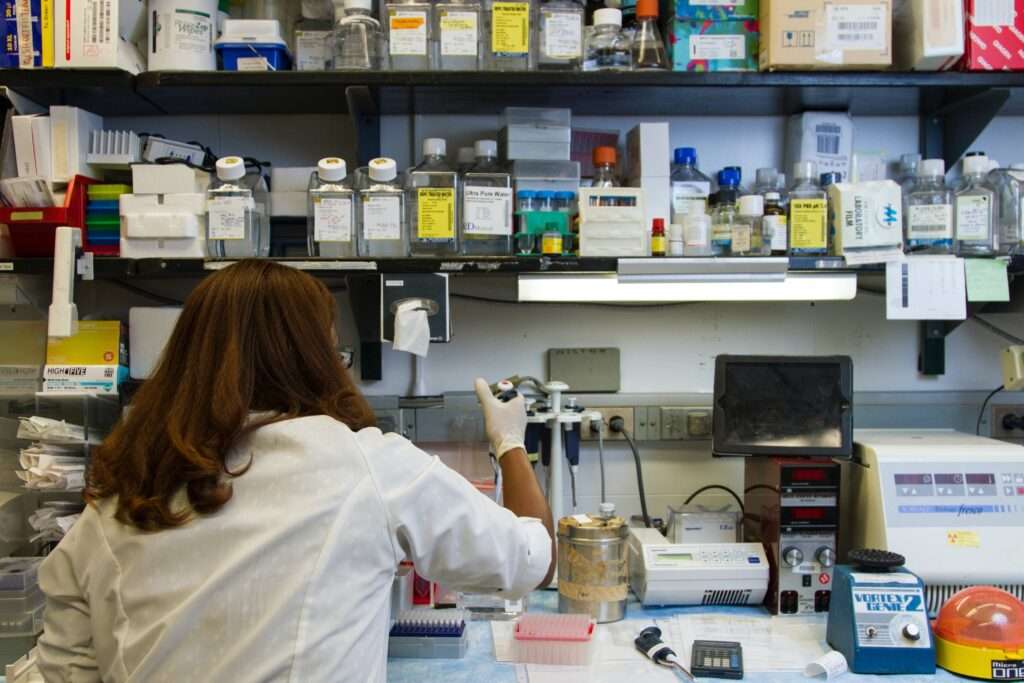
A team of researchers at Stanford University has developed Biomni, an artificial intelligence agent designed to act as a true “co-scientist” in biomedical research. Far more than a conventional chatbot, the platform can read scientific literature, analyse vast datasets, formulate hypotheses, write code, interpret results and propose new experiments, supporting virtually every stage of the research process.
The impact of this innovation could bring tangible benefits to people’s lives. By dramatically reducing the time required to complete tasks that once took weeks or even months, Biomni has the potential to accelerate the discovery of new medicines, improve disease diagnosis and make biomedical research significantly more efficient.
In one demonstration, the platform analysed more than 450 files containing continuous glucose monitoring data, dietary records and physical activity information. In just 40 minutes, it cleaned and integrated the data, generated visualisations and identified meaningful patterns that could support new scientific hypotheses—a process that researchers estimate would have taken a human scientist around 60 hours to complete.
Biomni integrates more than 150 specialised biomedical tools, 105 software packages and 59 databases, covering disciplines ranging from genetics to neurology. It also provides full citations for the sources it uses and maintains a detailed record of its analytical process, making scientific research more transparent and reproducible.
According to the research team, the goal is not to replace scientists but to free them from repetitive and time-consuming tasks, allowing them to focus on creativity, critical thinking and decision-making. A prototype of Biomni is already being used by more than 10,000 academic and industry laboratories, making it the most widely adopted AI co-scientist system in biomedical research.
Written by: Eduardo Quive