



Inspired by the way bees find their way back to the hive, scientists have developed a new navigation system for lightweight, low-energy drones. The innovation, called “Bee-Nav,” was led by Delft University of Technology in the Netherlands.
The project brings together robotics experts from Delft University of Technology, biologists from Wageningen University, also in the Netherlands, and researchers from Carl von Ossietzky University of Oldenburg, Germany. The team sought to reproduce the natural mechanisms used by bees to orient themselves in space, even with extremely small brains.
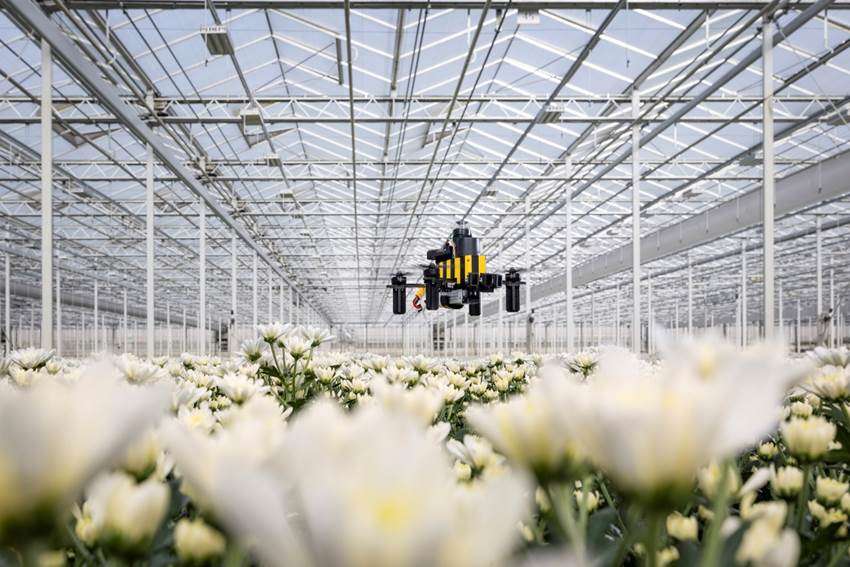
Unlike most current drones, which rely on detailed maps, GPS, and large processing capacity, Bee-Nav uses only 42 kilobytes of neural memory. Before starting the journey, the robot performs a short learning flight near the starting point, mimicking the behavior of bees. After that, it can move hundreds of meters away and successfully return to the initial location.
According to the researchers, this technology could make drones lighter, cheaper, and more energy-efficient, enabling new applications in areas such as agriculture, environmental monitoring, and industrial inspection. Among the examples cited are butterfly-like drones capable of monitoring agricultural greenhouses without the need for complex navigation systems.
In addition to the technological advancement, the study offers new clues about the intelligence of flying insects and how they manage to orient themselves over long distances with minimal biological resources. The research results were published in the scientific journal Nature.