



S’inspirant de la façon dont les abeilles retrouvent leur chemin vers la ruche, des scientifiques ont développé un nouveau système de navigation pour drones légers et à faible consommation d’énergie. Cette innovation, baptisée «Bee-Nav», a été menée par l’Université de technologie de Delft, aux Pays-Bas.
Ce projet réunit des experts en robotique de l’Université de technologie de Delft, des biologistes de l’Université de Wageningen, également aux Pays-Bas, et des chercheurs de l’Université Carl von Ossietzky d’Oldenburg, en Allemagne. L’équipe a cherché à reproduire les mécanismes naturels utilisés par les abeilles pour s’orienter dans l’espace, malgré la taille extrêmement réduite de leur cerveau.
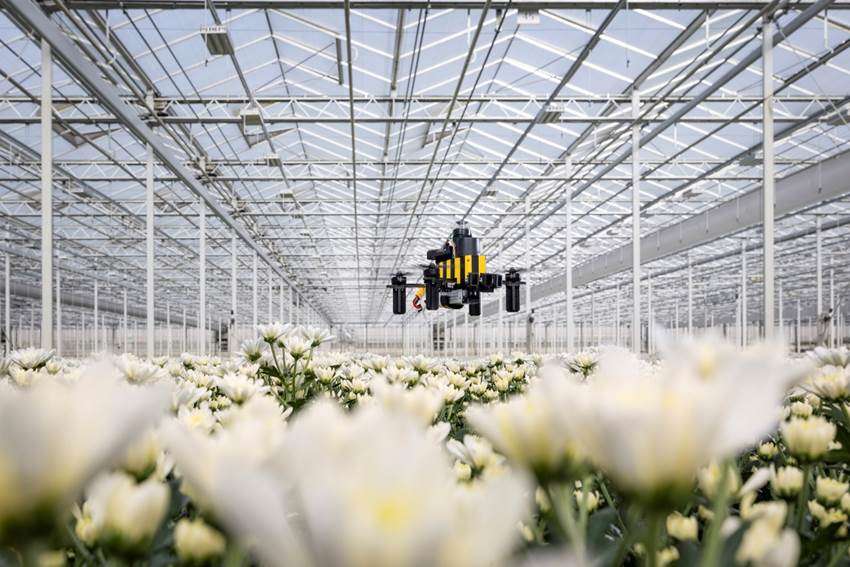
Contrairement à la plupart des drones actuels, qui s’appuient sur des cartes détaillées, le GPS et une grande capacité de traitement, Bee-Nav n’utilise que 42 kilo-octets de mémoire neuronale. Avant de commencer son voyage, le robot effectue un court vol d’apprentissage près de son point de départ, imitant le comportement des abeilles. Il peut ensuite s’éloigner de plusieurs centaines de mètres et revenir sans problème à son point de départ.
Selon les chercheurs, cette technologie pourrait rendre les drones plus légers, moins chers et plus économes en énergie, ouvrant la voie à de nouvelles applications dans des domaines tels que l’agriculture, la surveillance environnementale et l’inspection industrielle. Parmi les exemples cités figurent des drones aérodynamiques capables de surveiller les serres agricoles sans nécessiter de systèmes de navigation complexes.
Outre cette avancée technologique, l’étude apporte de nouveaux éclairages sur l’intelligence des insectes volants et sur la manière dont ils parviennent à s’orienter sur de longues distances avec un minimum de ressources biologiques. Les résultats de cette recherche ont été publiés dans la revue scientifique Nature.