

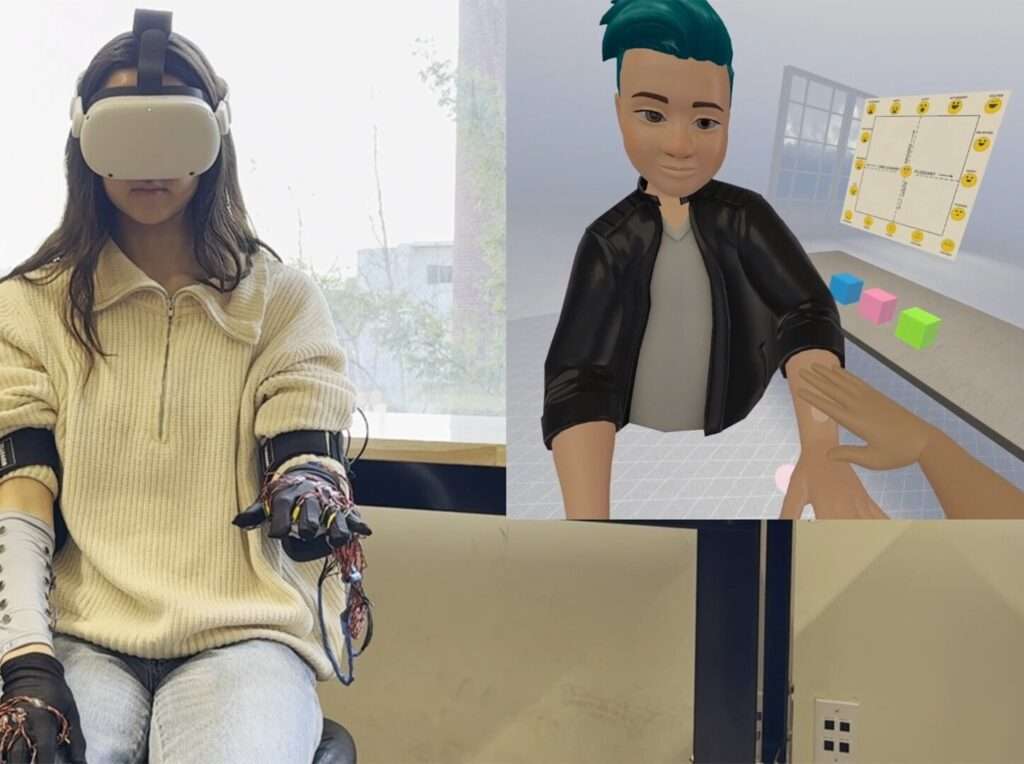
A wearable system that enables more natural and emotionally engaging interactions in shared digital spaces, opening up new possibilities, for example, for remote working, education, medical care, is what scientists at the University of Southern California have developed.
Touch plays a vital role in the way humans communicate and create bonds. From childhood to adulthood, physical contact helps foster emotional bonds, build trust and regulate stress. However, in the increasingly digital world, where screens mediate relationships, it is often absent.
To fill this gap, according to the study now released, researchers have developed a wearable haptic system that allows users to exchange physical gestures in virtual reality and feel them in real time, even kilometres away.
The findings highlight important design considerations that significantly enhance affective experiences, presence, embodiment, pleasure and naturalness, to promote more immersive and expressive mediated social touch experiences in Virtual Reality, the researchers explain.
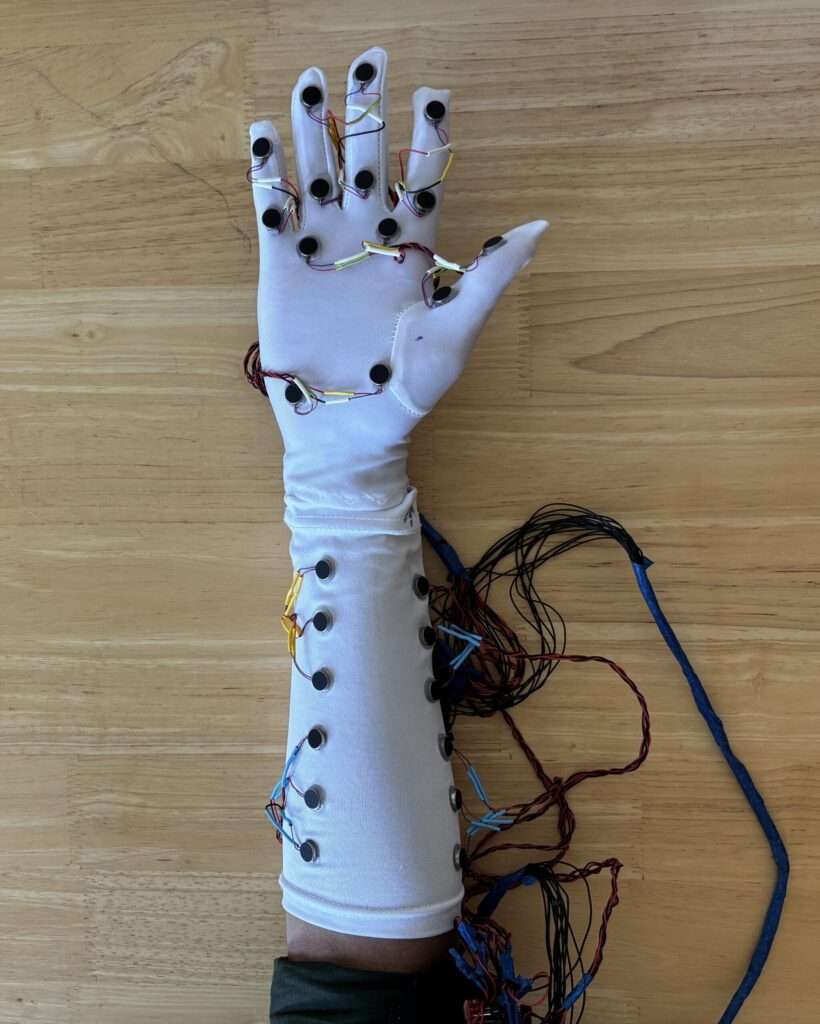
The system includes gloves and sleeves equipped with small vibration motors that simulate sensations such as pressure and movement. This allows users to perform and feel gestures such as pats, handshakes and squeezes in a shared virtual space. Users can also interact with virtual objects and receive realistic vibration feedback.
By Eduardo Quive