
By Denise Nicolau
A city I know, a city I love, a city I breathe. The home that watched me grow: my culture, my art, my gastronomy, my nature, and the life that pulses through every street, square and waterfront. Ahhh, so deeply mine.
Between memories and challenges, Maputo invites us to reflect deeply on the path we want to follow. A path where economic development, biodiversity conservation and citizens’ well-being coexist, though not always in balance. The city expands, buildings rise, avenues widen, yet the mangroves that have sustained generations continue to endure — silent, green witnesses to the city’s history.
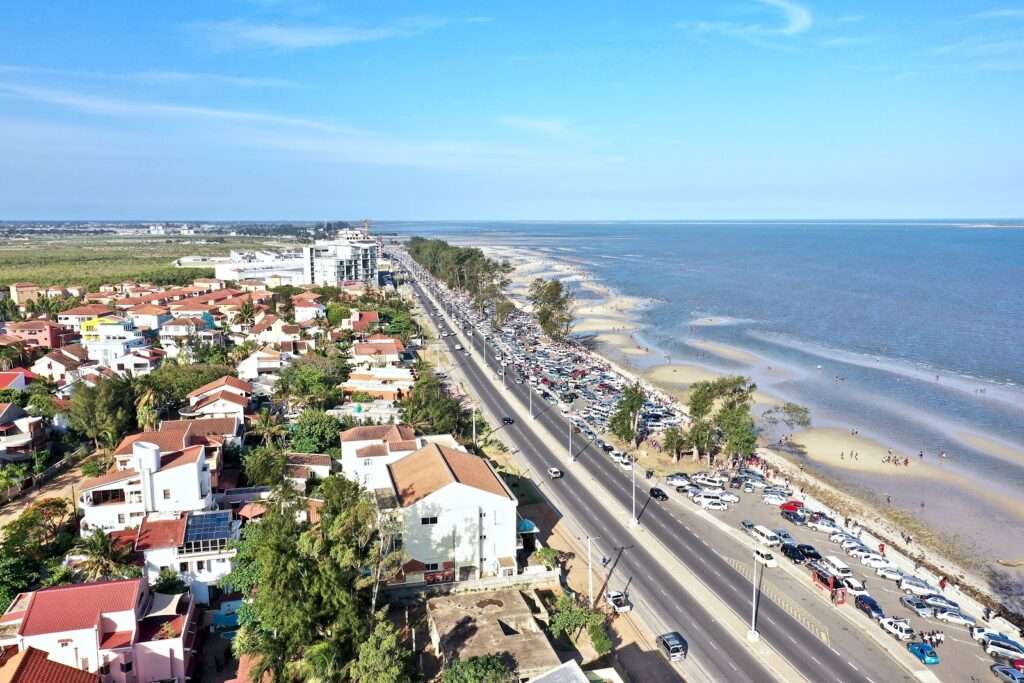
Maputo’s mangroves are not merely ornaments in a beautiful landscape seen from above, as this photograph reveals. They are guardians of coastal life, protecting the city from storms and severe erosion. They filter water, support artisanal fishing and sustain the biodiversity that keeps the city alive. Every root anchored in the mud, every leaf dancing in the wind, is a promise of life. Yet urban expansion continues to view the coastline as a space for immediate economic opportunities — hotels, luxury apartments and tourism developments — often overlooking the true value these ecosystems provide to my beloved city.
To walk along or fly over the Bay is to witness a striking contrast: on one side, concrete competing for space, machines building the future; on the other, intertwined roots, birds resting on branches and children at play, learning, even without realising it, that respecting nature means respecting life itself. The city, growing at a rapid pace, still seems to forget that economic development without ecological balance is fragile. It may grow in financial indicators, but the quality of life of many of its residents does not keep pace.
The people of Maputo understand this. Amid the rush of daily life, they continue to fight to keep nature alive — a nature that goes far beyond the beauty of a garden or a square lined with flowering acacia trees. It is the nature that helps regulate local and global climates, that ensures food reaches the tables of Maputo’s residents, and that reminds us every day that progress cannot be measured solely in numbers or real-estate investments. It is a quiet struggle, built through small actions: planting trees, restoring mangroves, cleaning beaches and educating children and young people about the value of coastal and marine ecosystems.
Photographing the mangroves of the Bay is capturing this tension. The vibrant green that contrasts with the blue sky and insists on surviving among buildings, ports and infrastructure; the reflection of roots in saltwater; the tired hands striving to protect what remains. Every image is a warning, an invitation to reflect: the city we want depends on the choices we make today. Coastal development must recognise mangroves not as obstacles, but as vital allies in building a resilient, fair and inclusive Maputo.
Across the city, I also see small laboratories of innovation: community groups promoting urban gardens, composting, recycling, beach-cleaning campaigns and cultural initiatives that deserve to be expanded and replicated. It is within this space between creativity, resistance and critical thinking that a narrative of the future is being built. Maputo can grow without sacrificing its natural heritage, without abandoning its most vulnerable citizens and without losing the identity that makes it unique.
Yet the reflection remains unavoidable. Behind the appearance of progress, inequalities persist. There are neighbourhoods where streets without sanitation coexist with paved avenues; under-resourced schools stand beside sophisticated buildings; children study with limited means while the city plans multimillion-dollar developments along the seafront. Economic development is urgent, but it cannot be blind. It must respect the balance that sustains urban life and the nature that makes it possible.
As the sun sets over the Bay, illuminating both concrete and greenery, I feel that Maputo still has many bright days ahead. But those days will only be possible if we learn to listen to the mangroves — that force of nature that seems to have grown alongside me. Development will only truly be development if it is pursued with awareness, care and justice.
Long live the beautiful City of Maputo! With more than 138 years of history, may it never lack the inspiration to continue building a city that honours its past, protects its mangroves, respects its citizens and looks towards the future with courage and wisdom.