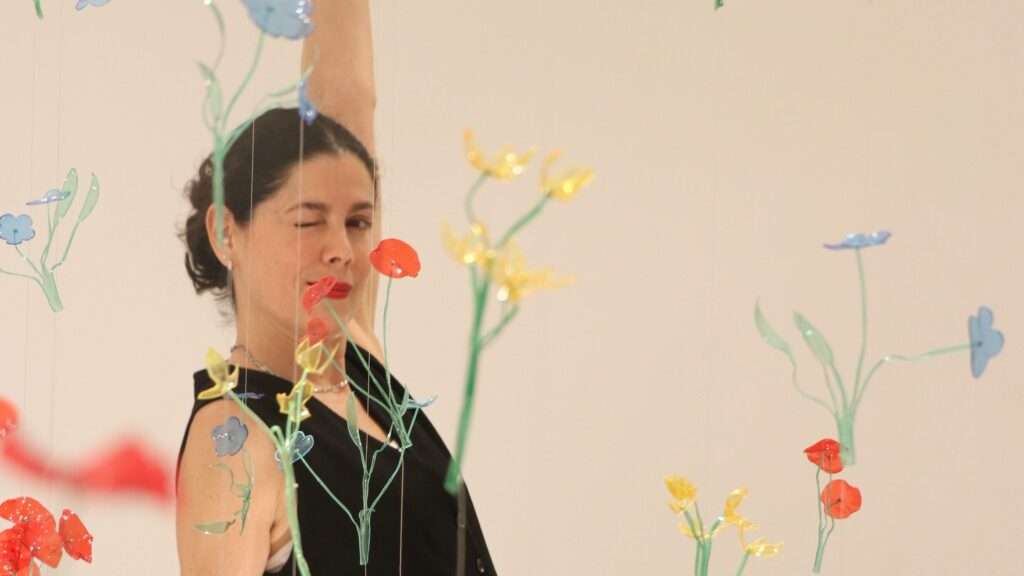


At first glance, it looks like a rain of flowers suspended in mid-air. Hundreds of colourful petals fill the space, reflecting light onto the walls and inviting visitors to lose themselves in their vibrant colours and delicate forms. But what appears to be a flourishing garden conceals a far less poetic reality: every single flower was made from a discarded plastic bottle.
This transformation is at the heart of Ten Springs, an art installation by Ecuadorian artist Sue Bejarano, currently on display at the Fernando Leite Couto Foundation in Maputo. The work features 520 flowers made from reused plastic bottles, bringing together beauty, creativity, and environmental awareness.
The idea was born from a troubling reality. Although plastic is part of our everyday lives, much of it never truly disappears. Instead, it breaks down into increasingly smaller particles that eventually find their way into our food, our water, and even the air we breathe. “These beautiful flowers will outlive us all,” says Sue Bejarano. “After many years, they will break down into tiny particles that will mix with our food, our water and even the air we breathe.”
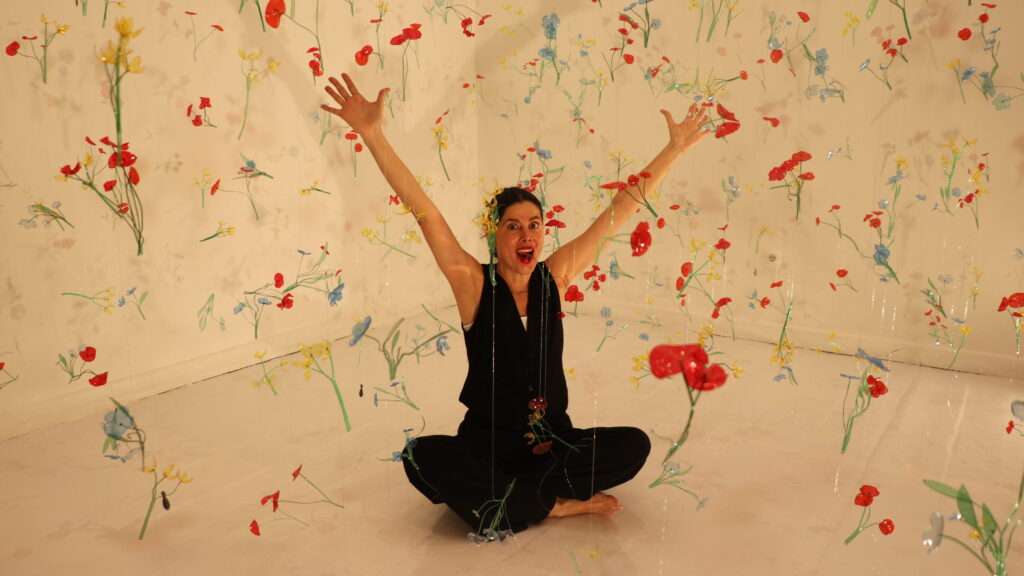
The artist explains that each flower represents one week of a person’s life. Together, the 520 flowers symbolize the amount of microplastics an average person is estimated to consume over the course of ten years. The colourful garden thus becomes a visual representation of something that normally remains invisible.
By transforming a material associated with waste and pollution into a captivating work of art, Sue Bejarano has created an installation that is both enchanting and unsettling. Balancing beauty with an urgent environmental message, Ten Springs invites visitors to reflect on consumption, sustainability, and the possibility of giving discarded materials a new life.