
When it was conceived, it was named Lourenço Marques. On February 3, 1976, it was reborn as Maputo, just as the newly independent Nation was rising. It was reborn with great strength, with a desire to grow and do everything differently, just as everyone hopes a child will grow up: healthy, happy, and a source of pride.
Known as the land of the Marongas and Machanganas, full of hope for the reconstruction of something new, Maputo began to write its own history, although some believe it was already favored by having been chosen to receive the title of capital of the country. Despite being on everyone’s lips, perhaps few know what or who it really is.
Most of its residents must have been speakers of local languages, Ronga and Xichangana. But this city refuses to belong to some, without others. Many are welcomed and become part of the community: Macuas, Ma-Senas, Makondes, Indians, Arabs, Europeans, among others, who may or may not even understand the “Good morning” in the local language. In fact, there are also several local residents who don’t even know how to respond to a greeting in their mother tongues; many were raised not to learn this language, which is steeped in traditional roots but is now marginalized. Instead, excellence in speaking and writing the language inherited from Portuguese colonization is demanded.
Maputo, where many cling to their roots rather than modern medicine, but because they want to be socially accepted, they do everything in secret so they won’t be judged. Because if a child doesn’t take the fermented roots, they can grow up “crazy” or get so sick that they might die, hence the importance of giving them the moon medicine. Moreover, here, even to consult a doctor, a healer must recommend it, after making sure that there is no ancestral spirit interfering with well-being.
Where traditional marriage, lobolo, is valued more than civil marriage, uncles must show their negotiating skills so that the groom’s family pays almost the same as the bride’s family may have invested in her upbringing. And, if this phase is preceded by a pregnancy, it is better for the bride’s family, who must collect the penalty for this failure. This is because lobolo is a very important traditional practice that should not, in any way, be ignored. Whoever dares not to do this with the wife while she is still alive, risks doing it when she is dead.
Marrabenta and Phandza? no longer have much of a stage, “it’s been left behind”. Lately, it has become a characteristic of those who are not up-to-date or who effectively do not have good musical taste. The thing is, jazz, Afro-jazz, Amapiano, and others are more applauded and apparently present the best compositions. In fact, if it’s marrabenta, it must be commercial, suitable for a social event, but that event will never be for the elite.
Where almost all migrants from other provinces came in search of better job and life opportunities, as this is the famous economic capital, but what few knew is that living here would be more expensive, because the cost of living is very high and, with the population concentration, there is a lack of jobs. They do exist, but for those who have connections here or there, sometimes with or without a degree, the remuneration will depend on each person’s luck or the power of the patron they have.
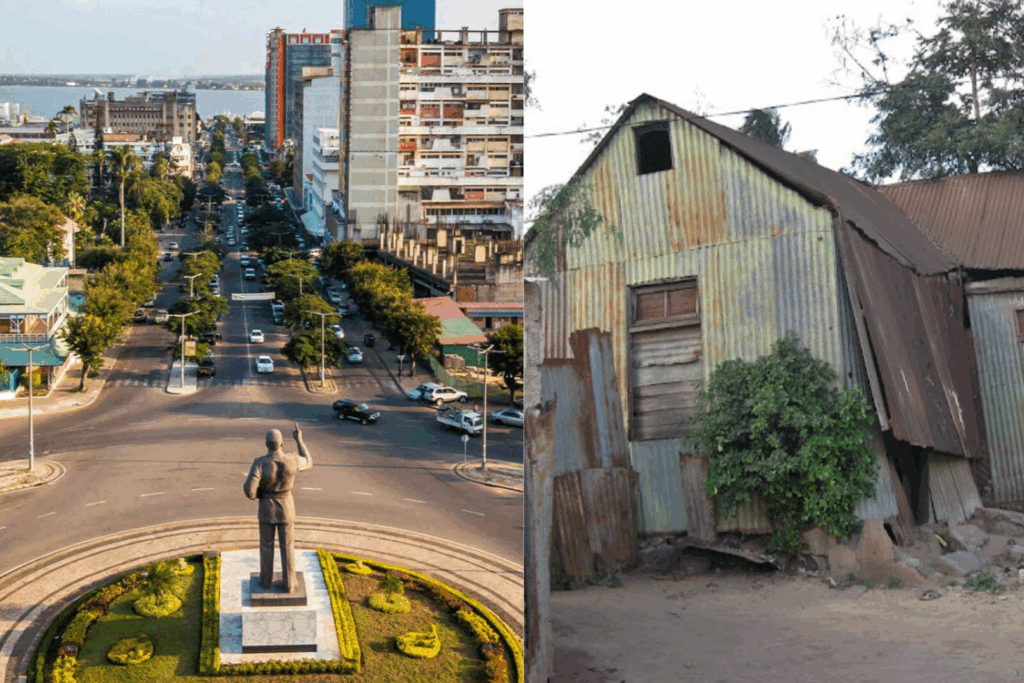
Where? In the far south of Mozambique, between the blue of the Indian Ocean and the heat of the streets, Maputo rises like a peninsula that unites past and present. Capital and economic center, it is also a mirror of inequalities, where luxury and scarcity share the same map and the same bay. Where in Mafalala, Chamanculo, and Maxaquene, the stories that helped build the city still echo. Meanwhile, in Polana and Sommerschield, the asphalt shines, the trees are pruned, and the city looks different cleaner, more expensive, and less accessible to those who helped it grow.
Hoyo-Hoyo (Welcome) to Maputo, where these and many other things happen, but where you should never question the whys.
Written by: Elisa Chaúque