
Sometimes, when the wind blows from the direction of Machava Socimol Km15, the dust rises slowly, as if the neighborhood were breathing.
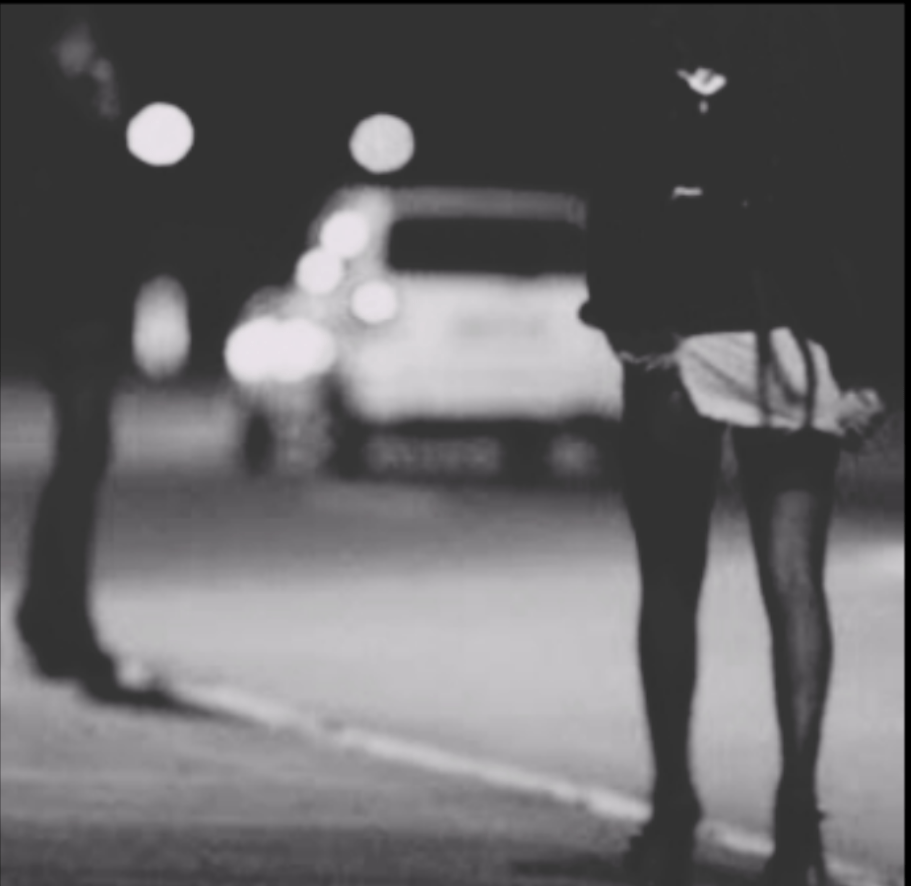
Machava at night has a smell that only those who live there understand: a mixture of charcoal, warm beer, and promised rain. The day ends, the minibuses stop, and silence comes with the footsteps of the girls who begin to appear on the street corners. It is at this moment that María de Jesus leaves.
Her body has already learned the way: from Dona Amélia’s stall to the corner of Km15, where the light of the oil lamp flickers from time to time, there, among the shadows, she waits.
She says she likes that spot because the bar next door always plays some old marrabenta, the kind that evokes childhood and sadness at the same time.
As the night grows, the neighborhood changes its voice. The cars talk loudly, the motorcycles scream, the men laugh drunkenly, and the sandy ground seems to hear everything without complaining. María walks slowly, watching the faces that pass by. Some are familiar: drivers, young people, married couples pretending to be free, even police officers who prefer to negotiate silence. Other faces come from outside, in a hurry, nameless, without looking.
She has learned to read eyes. She knows who brings money, who brings danger, and who brings only loneliness. But sometimes someone different appears. Like the young man from a store who, one night, bought her water. He didn’t want anything, only asked if she was tired. They talked about dreams, about mechanics, about lives stopped at the city’s traffic lights. He left and never came back. But he remained with her, like a small reminder of humanity.
María followed this path for lack of another. She lost her job as a maid when her employer went to South Africa. She tried selling used clothes, the kind from the flea market, but the profit died on food and day labor. Once, or perhaps wrongly, a supposed friend brought her to the nightlife of Km15, to the corners frequented by “women of the night,” saying: “It’s just for a few nights, sis.” But nights have no calendar. And some turn into years.
The neighborhood talks about her, yes. The neighbors whisper when she passes by, saying she’s the “lost woman.” No one asks how much rice costs, nor how much the silence of having no choice weighs. María doesn’t answer. She swallows the words with the same calm with which she swallows fear. Because fear, oh yes, how she knows it: the fear of the police patrolling, the fear of the violent client, the fear of the invisible virus that changes destinies.
But she also knows strength, the kind that comes when the sun rises and she’s still alive, with another day paid, another meal guaranteed for her mother and daughter, residents of Boane.
Few people know, but María writes. In an old notebook, hidden inside a torn suitcase, she writes everything down: the smells, the voices, the fake names and the real dreams. Sometimes she writes nonsensical verses, other times she writes prayers that not even God should read. But she writes.
And in that notebook she is free, freer than on the streets, more alive than in the early hours of the morning. Because for her, freedom is not a luxury. Freedom is the power to choose. To choose her own path, her own time, her own body.
One day, she wants to open a stall, sell chicken, rice, and cold beer. She wants to see her daughter study, wear a uniform, laugh without haste. Maybe she even wants to study again, who knows? She dreams, even when they say she can’t.
Sometimes, when exhaustion weighs her down, María closes her eyes and listens to a song playing in the distance, Lizha James singing. The melody arrives mixed with the noise of motorcycles and conversations. She smiles and softly repeats the phrase she invented for herself:
-“Life pushes, but I push back.”
The day dawns slowly over Km15, Machava. The girls disappear like tired ghosts. The cars return, the vendors shout, the neighborhood wakes up pretending it saw nothing. But María de Jesus knows that the night holds everything, the secrets, the fears, and also the small miracles.
And when the first ray of sunlight touches the corner of Km15, she sighs. Once again, she survived. And that, for someone who lives by the night, is already a kind of miracle.
Written by: Melo Munguambe
Photo: Internet