
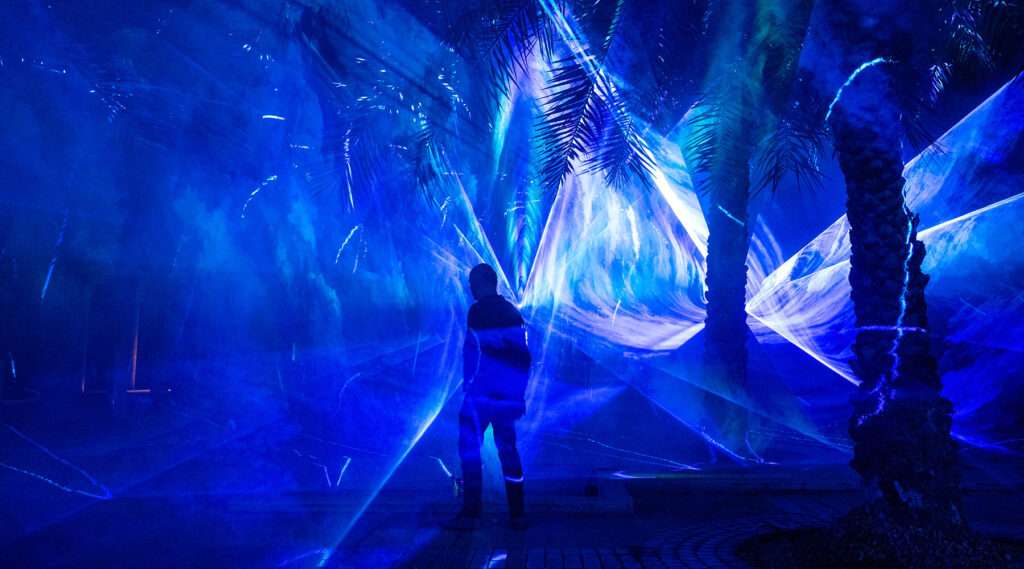
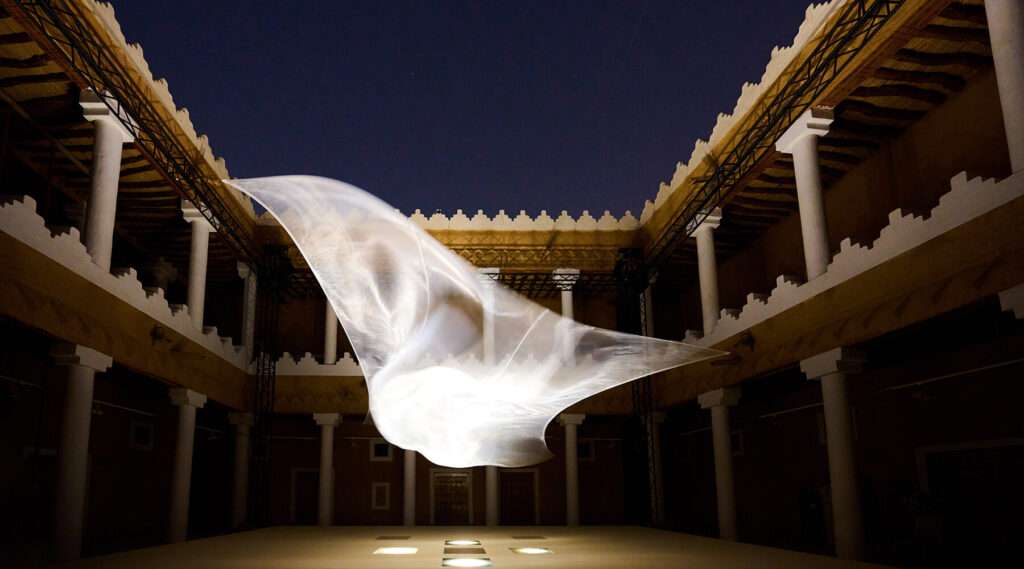
The Noor Riyadh festival, considered the world’s largest light art festival, has just ended, having transformed six important locations in the Saudi Arabian capital into an illuminated gallery that takes over the city. Curated by Mami Kataoka, Sara Almutlaq, and Li Zhenhua, the festival showcased 60 artworks under the theme “In the blink of an eye,” bringing together 59 artists from 24 countries.
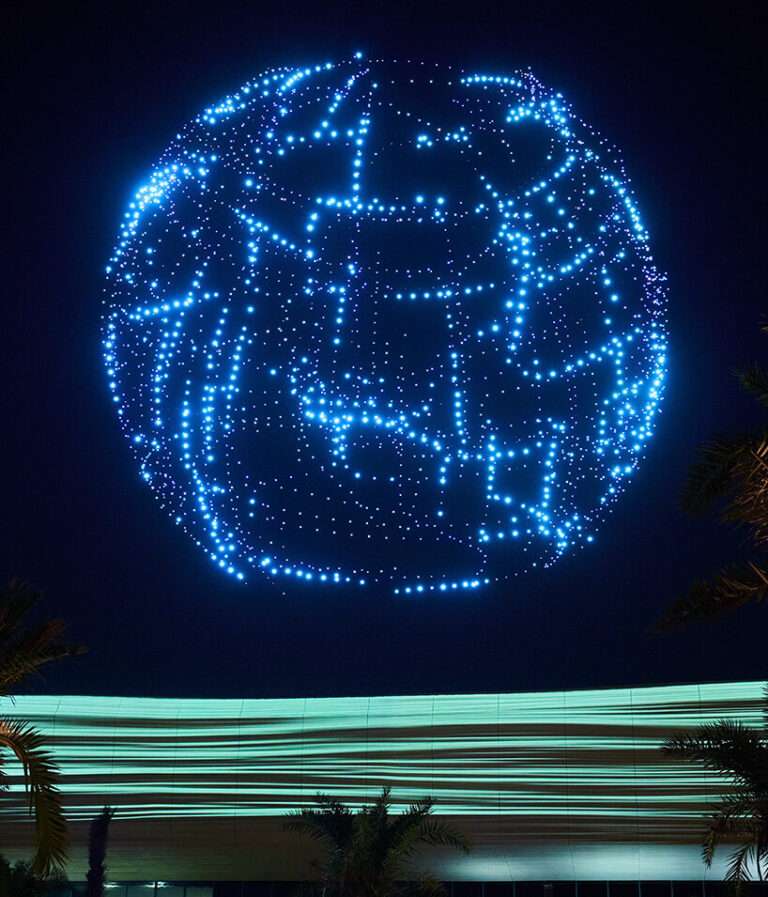
The 2025 edition expands Noor Riyadh’s mission to be a space where art, architecture, and movement meet through diverse material languages, from drones and inflatables to lunar data and neon grids, revealing a city transformed by light, imagination, and shared experience. Featuring international and local artists such as Shinji Ohmaki, atelier oï, Ayoung Kim, Muhannad Shono, and Ziyad Alroqi, the festival explored Riyadh’s rapid transformation, inviting visitors to witness moments of change through large-scale installations in the Qasr Al Hokm District, the King Abdulaziz Historical Centre, the stc Metro Station, the KAFD Metro Station (designed by Zaha Hadid Architects), the Al Faisaliah Tower, and the JAX District.
Since its launch in 2021, Noor Riyadh has exhibited over 550 works of art and welcomed over 9.6 million visitors. It is part of the Riyadh Art initiative, one of the four original mega-projects of Vision 2030, which integrates public art into metro stations, parks, and civic spaces. The festival aims to accelerate the city’s cultural visibility and support the growth of Saudi Arabia’s creative economy through community engagement, workshops, and educational programs. The vibrant 2025 edition’s Pre-Premiere Night, at the stc Metro Station, brought together artists, cultural leaders, and the public under immersive projections that rippled across the station’s polished surfaces.
The event signals the festival’s ambition: to connect Riyadh’s historic core with its futuristic metro network through bold experiments in light, movement, and architecture. Executive Director Khalid Al-Hazani describes Noor Riyadh as a “living expression of the capital’s evolving identity, capturing the convergence between heritage and progress.”
Written by: Eduardo Quive